Buying Guides
Best 5000 GPH Pond Pumps: Power Picks for Big Waterfalls and Large Ponds
Need serious flow? These 5,000 GPH pond pumps suit wide waterfalls and ponds around 5,000 gallons. See who really needs one, what pipe to use, and what it costs to run.
This guide contains affiliate links. As an Amazon Associate I earn from qualifying purchases. How this works.
✅ The short answer
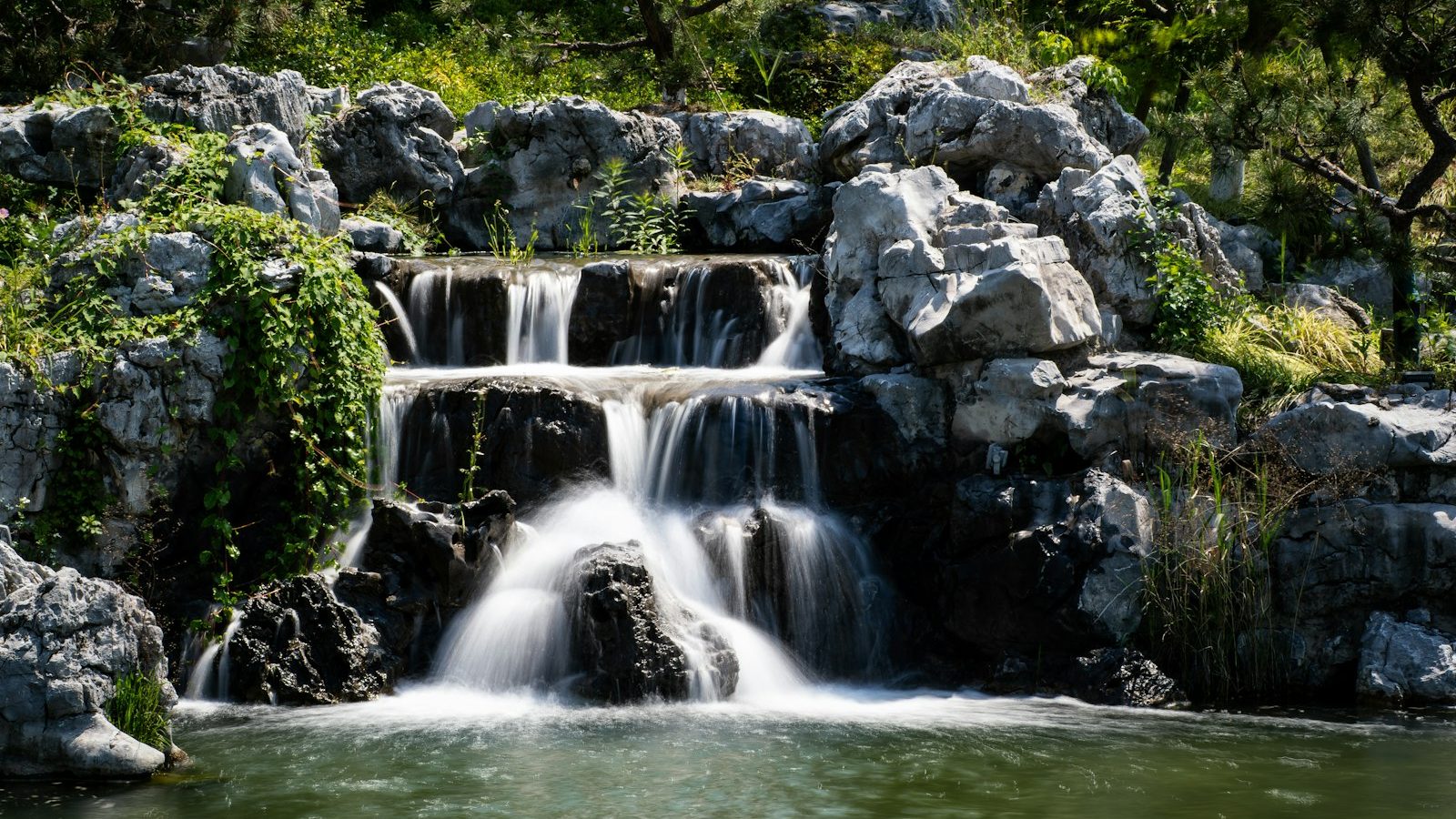
A 5,000 GPH pond pump is right for a waterfall about 3 to 4 feet wide or a pond of around 5,000 gallons. For most people the Aquascape EcoWave 5000 is the smart pick when the lift is low, and the Pond Guy RapidFlo 5000 when the water has to climb high.
Whatever you choose, plan on 2-inch or larger pipe. At this flow, narrow pipe wastes more water than any pump can make up for.
Five thousand gallons an hour is a lot of water. That is about 83 gallons every minute, enough to fill a bathtub in under 30 seconds. A pump this size can turn a wide stone ledge into a real curtain of water. It can also empty your wallet if you buy one you do not need.
This guide to the best 5000 GPH pond pumps will help you decide if you truly need this much flow, compare five popular models, pick the right pipe, and understand the running cost before you buy.
One honest note: this is desk research. We compared the details published on Amazon.com listings. We did not test these pumps ourselves, and several listings leave out the wattage, which we point out.
Do you really need a 5,000 GPH pump?
Bigger is not better with pond pumps. A pump that is too large costs more to buy, more to run, and can push dirty water through your filter too fast. So check these three numbers first.
| Your setup | Flow you need | Is 5,000 GPH right? |
|---|---|---|
| Waterfall 24 inches wide, even sheet | About 2,400 GPH at the top | No, too much |
| Waterfall 36 inches wide, even sheet | About 3,600 GPH at the top | Yes, once lift losses are counted |
| Waterfall 48 inches wide, even sheet | About 4,800 GPH at the top | Yes, and you may need more |
| Goldfish pond, 2,500 gallons | About 2,500 GPH | No, too much |
| Pond, 5,000 gallons | About 5,000 GPH | Yes |
| Koi pond, 3,000–4,000 gallons | 3,000–8,000 GPH | Often yes |
Rules of thumb: about 100 gallons per hour for each inch of waterfall width, and the whole pond about once an hour (more for koi).
Remember: the box number is not what you get
“5,000 GPH” is the flow with no lift at all. The moment the pump has to push water up to a waterfall, the flow drops. That is why a 36-inch waterfall, which needs about 3,600 GPH at the top, is a good match for a pump sold as 5,000 GPH. The spare 1,400 GPH is used up by the climb and the pipe.
How much you lose depends on the pump’s maximum lift (also called max head). A pump with a high max lift keeps more of its flow as the height goes up. Our guide to pond pump head height explains this in plain English.
Key insight: At 5,000 GPH, the pipe matters as much as the pump. The wrong hose can throw away a third of your flow before the water reaches the waterfall.
The pipe size you need at 5,000 GPH
Water rubbing against the inside of a pipe slows down. The faster it moves and the narrower the pipe, the more you lose. We ran the numbers for 5,000 GPH using the standard Hazen-Williams formula for smooth pipe.
| Pipe inside diameter | Lift lost per 10 ft of pipe | Water speed | Verdict |
|---|---|---|---|
| 1-1/2 inch | About 5.6 ft | About 15 ft per second | Far too small |
| 2 inch | About 1.4 ft | About 8.5 ft per second | Workable for short runs |
| 3 inch | About 0.2 ft | About 3.8 ft per second | Best for long runs |
Calculated estimates for smooth pipe (C = 140). Corrugated hose loses more. A common design target is to keep water speed under about 5 ft per second.
Look at the first row. Twenty feet of 1-1/2 inch pipe would cost you about 11 ft of lift. Most 5,000 GPH pumps would have almost nothing left for the waterfall. With 2-inch pipe the same run costs under 3 ft, and with 3-inch pipe it is almost nothing.
The simple rule: use 2-inch pipe for runs under about 20 ft, and 3-inch pipe for anything longer. Our pump size calculator will estimate the loss for your own pipe length.
⚠️ Watch out: Many pumps come with stepped hose adapters. If you push a small hose onto the narrow end, you choke the pump. Cut the adapter back to its largest step and use hose to match.
Quick picks
| Pump | Max flow | Max lift | Best for |
|---|---|---|---|
| Aquascape EcoWave 5000 | 5,000 GPH | Check listing | Low-lift waterfalls, skimmers and vaults |
| The Pond Guy RapidFlo 5000 | 5,000 GPH | 32 ft | Tall waterfalls and long pipe runs |
| Aquascape AquaSurge 5000 | About 5,000 GPH | Check listing | Skimmer ponds and Pondless waterfalls |
| Alpine PAL5200 | 5,200 GPH | 25 ft | High lift on a tighter budget |
| Jebao APP-5000 | 5,200 GPH | 21.3 ft | Budget waterfall builds |
Figures are from Amazon.com listings, checked in October 2026. As an Amazon Associate I earn from qualifying purchases.
The best 5,000 GPH pond pumps, one by one
1. Aquascape EcoWave 5000: best for low-lift waterfalls
Why it works: magnetic-drive pumps are very efficient when they do not have to push water high. The problem it solves: big flow for a wide, low spillway without the power bill of a high-pressure pump.
2. The Pond Guy RapidFlo 5000: best for tall waterfalls
Why it works: a high maximum lift means the pump still has plenty of push left at normal waterfall heights. The problem it solves: the weak flow you get when a low-lift pump is asked to climb too far.
3. Aquascape AquaSurge 5000: best for skimmer ponds
Why it works: it is built to live in a skimmer or vault, protected from large debris. The problem it solves: steady, high flow with the backing of a 3-year warranty. See our Aquascape pond pumps review for the whole range.
4. Alpine PAL5200: best high-lift value
Why it works: a strong motor gives it real pushing power. The problem it solves: a tall waterfall on a smaller budget. Just go in with eyes open about the electricity.
5. Jebao APP-5000: best for budget builds
Why it works: it delivers the headline flow for less money up front. The problem it solves: getting a big waterfall running without a big first bill.
What does a 5,000 GPH pump cost to run?
This is the part most buyers skip, and it is the part that costs the most. Pumps this size use real power. The formula is watts × 8,760 hours ÷ 1,000 × your price per kWh.
| Pump power | Energy per year (nonstop) | Cost per year at 17¢/kWh | Cost per month |
|---|---|---|---|
| 200 W | About 1,750 kWh | About $298 | About $25 |
| 300 W | About 2,630 kWh | About $447 | About $37 |
| 426 W (Alpine PAL5200) | About 3,730 kWh | About $634 | About $53 |
| 500 W | About 4,380 kWh | About $745 | About $62 |
Example rate of 17 cents per kWh. Check your own bill, because rates vary widely.
A difference of 200 watts between two pumps is about $300 a year when they run nonstop. Over five years that is $1,500, far more than the price gap between a cheap pump and an efficient one. Before you buy, find the wattage on the label or in the manual and run it through our energy cost calculator. For more ways to save, see pond pump running costs.
💡 Money-saving tip: If your big waterfall is for show, put that pump on a timer and let a small, efficient pump run the filter around the clock. Two pumps often cost less to run than one big one.
How to install a high-flow pump the right way
- Use a skimmer or pump vault. A big pump on the bare pond floor pulls in debris fast. A vault protects it and makes it easy to lift out.
- Fit 2-inch or 3-inch pipe. See the pipe table above. This is the single biggest factor in how much water reaches the top.
- Add a check valve. When the pump stops, the water in the pipe runs back down. A check valve stops the backflow and keeps the basin from overflowing.
- Add a ball valve after the pump. It lets you trim the flow and makes servicing easier. Only ever restrict the outlet side.
- Check the water in the basin. A big pump lifts a lot of water into the stream before any comes back. The pond or basin must hold enough that the pump stays covered.
- Use the right outlet. A pump of this size can draw several amps. Plug it straight into a GFCI-protected outdoor outlet, never an extension cord.
⚠️ Safety first: Water and electricity are a dangerous mix. Always unplug the pump before you put your hands in the pond or touch the equipment. Never lift a pump by its cord. Plug into a GFCI-protected outdoor outlet, and if the GFCI keeps tripping, stop using the equipment and have it checked. For any fixed outdoor wiring, hire a licensed electrician.
7 common mistakes (and how to fix them)
- Buying 5,000 GPH for a 2,000-gallon pond. Fix: size by pond volume and waterfall width, not by “more is better.”
- Using 1-1/2 inch pipe. Fix: use 2 inch at least, and 3 inch for long runs.
- Ignoring maximum lift. Fix: for a tall waterfall, pick a pump with a high max lift, such as the RapidFlo or the Alpine.
- Not checking the watts. Fix: find the wattage before you buy. It can decide the true cost of the pump.
- Forgetting the filter’s limit. Fix: check the filter’s maximum flow, and use a bypass if needed. See how to match a pump to a filter.
- Too small a basin on a Pondless waterfall. Fix: make sure the basin holds enough water to fill the stream and still cover the pump.
- Skipping the check valve. Fix: fit one so water does not rush back when the power goes off.
Pro tips
- Size the pipe for the future. Why it works: pipe is cheap and hard to change later. A 3-inch pipe today lets you upgrade the pump tomorrow.
- Use sweeping bends, not sharp elbows. Why it works: every tight 90-degree elbow acts like several extra feet of pipe.
- Think about two smaller pumps. Why it works: two 2,500 GPH pumps give you a backup, and you can switch one off in winter or at night.
- Measure real power use. Why it works: a plug-in power meter shows what the pump truly draws in your setup.
- Clean the intake often. Why it works: a high-flow pump pulls debris in fast. A clear intake keeps the flow up and the motor cool. See how to clean a pond pump.
Remember: with big pumps you pay three times: once for the pump, once for the pipe, and every month for the power. Spend your effort on the last two.
Real-life examples
These are typical situations we put together to show how the choice works. They are illustrations, not customer reviews.
The wide, low spillway
The setup: a 40-inch stone ledge only 2 ft above a 4,000-gallon pond, fed through 12 ft of 2-inch pipe. The choice: the EcoWave 5000. The lift is low, so a mag-drive pump keeps most of its flow and uses less power doing it.
The tall hillside waterfall
The setup: a waterfall 8 ft above the basin with a 30 ft pipe run up the slope. The choice: the RapidFlo 5000 on 3-inch pipe. Its 32 ft maximum lift leaves plenty in reserve at 8 ft.
The weekend showpiece
The setup: a big decorative waterfall that only runs on evenings and weekends, while a small pump handles the filter. The choice: the Alpine PAL5200 on a timer. The high wattage matters much less when the pump runs 20 hours a week instead of 168.
Frequently asked questions
How big a pond can a 5,000 GPH pump handle?
As a rule of thumb, a pond of about 5,000 gallons with a normal fish load, or a koi pond of roughly 2,500 to 5,000 gallons. Remember the pump will deliver less than 5,000 GPH once it is lifting water.
How wide a waterfall can a 5,000 GPH pump run?
About 3 to 4 feet wide for an even sheet of water, after allowing for the flow lost to lift and pipe friction.
What size pipe do I need for 5,000 GPH?
At least 2-inch inside diameter for short runs, and 3-inch for runs longer than about 20 feet. Avoid 1-1/2 inch pipe at this flow.
How much electricity does a 5,000 GPH pump use?
It varies a lot by design, roughly from 200 to 500 watts. Running nonstop at 17 cents per kWh, that is about $300 to $745 a year. Always check the wattage on the label.
Is a 5,000 GPH pump too strong for my filter?
It may be. Check the maximum flow in your filter and UV clarifier manuals. If the pump exceeds it, use a bypass so only part of the flow goes through the filter.
Can I slow a 5,000 GPH pump down?
Yes, with a ball valve on the outlet side, or by choosing an adjustable-flow pump. See our guide on how to slow down a pond waterfall.
Your final buying checklist
- ✅ My waterfall is about 3–4 ft wide, or my pond is around 5,000 gallons
- ✅ I measured my lift from the water surface to the outlet
- ✅ The pump’s max lift is well above my total lift
- ✅ I will use 2-inch or 3-inch pipe
- ✅ I found the pump’s wattage and worked out the yearly cost
- ✅ The flow does not exceed my filter’s maximum
- ✅ My pond or basin holds enough water to keep the pump covered
- ✅ I have a GFCI-protected outlet within reach of the cord
- ✅ I checked the warranty and model number on the current listing
Low waterfall and long running hours?
The Aquascape EcoWave 5000 is the efficient choice for wide, low spillways.
Buy the EcoWave 5000 from Amazon →
As an Amazon Associate I earn from qualifying purchases.
How we researched this guide
This article is desk research, not a hands-on test. In October 2026 we collected the specifications shown on the Amazon.com listings for each product and calculated pipe friction with the Hazen-Williams formula. Where sources gave different numbers, we showed the range or flagged it. We do not quote prices, star ratings, or stock levels because they change daily. Manufacturers also update products, so please confirm the details on the current listing and in the manual before you buy.
Related guides
Best Large Pond Pumps: How to Move Big Water Without a Big Bill
Ponds over 5,000 gallons need a different plan. Learn how to size a large pond pump, choose the pipe, cut running costs, and compare five strong picks.
Best Turtle Pond Pump: What to Buy for Clean, Safe Water
Turtles are far messier than fish, so a turtle pond needs a tougher pump and a bigger filter. Here is how to size both, with five proven picks.
Little Giant Pond Pumps: A Simple Guide to Every Range
Little Giant makes three very different kinds of pond pump. This guide explains the F-Series, WGP and PE ranges in plain English, with specs and running costs.