Filters & Accessories
DIY Pond Filter Ideas: 6 Simple Builds with Step-by-Step Tutorials
Build your own pond filter from a bucket, a barrel or a gravel bog. Six DIY pond filter ideas with step-by-step instructions, media advice and pump sizing.
This guide contains affiliate links. As an Amazon Associate I earn from qualifying purchases. How this works.
✅ The short answer
The easiest DIY pond filter is an up-flow barrel filter: pump water into the bottom of a food-safe barrel, let it rise through filter mats and bio media, and let it flow back to the pond from the top. It costs little, works well, and you can build it in an afternoon.
For a small pond, a bucket version does the same job. For a natural look, a gravel bog filter with plants is hard to beat. All six ideas are below, with the steps for each.
Shop-bought pond filters work well, but they are not magic. Inside every one is the same simple idea: slow the water down, trap the dirt, and give helpful bacteria somewhere to live. Once you understand that, you can build a filter yourself, often with a bigger capacity than the one you would have bought.
This guide gives you six DIY pond filter ideas with step-by-step tutorials. You will learn how a filter really works, which media to use, how to size the pump, and the mistakes that make home-made filters leak or fail.
One honest note: this is desk research based on widely shared pond-keeping practice and published product details. We have not built and tested these designs ourselves, so treat the steps as a starting plan and check each part as you go.
How a pond filter works (in plain English)
Every good pond filter does two jobs, in this order.
- Mechanical filtering: trap the dirt. Water passes through coarse then fine material, like mats or pads. Bits of leaf, fish waste and algae get stuck.
- Biological filtering: clean the invisible stuff. Fish produce ammonia, which you cannot see but which harms them. Helpful bacteria turn it into safer compounds. Those bacteria need a rough surface to live on and a steady flow of water bringing them oxygen.
That is it. Dirt first, bacteria second. If you put them the other way round, the bio media clogs with muck and stops working.
The three rules of a DIY filter that works
- Water in at the bottom, out at the top. This “up-flow” design lets heavy dirt settle at the bottom, where you can drain it away.
- Make the outlet bigger than the inlet. Water is pumped in under pressure but drains out by gravity alone. If the outlet is too small, the filter overflows. A good rule is an outlet pipe at least one size larger than the inlet.
- Put the filter above the pond. A gravity-return filter must sit higher than the water level so the clean water can run back down.
Key insight: A filter is not a strainer. Most of its work is done by living bacteria. Your job is to give them a home and never let the water stop.
6 DIY pond filter ideas compared
| Idea | Best for | Difficulty | Looks | Upkeep |
|---|---|---|---|---|
| 1. Bucket filter | Ponds up to about 300 gallons | Very easy | Needs hiding | Rinse often |
| 2. Barrel up-flow filter | Ponds of 500–2,500 gallons | Easy | Needs hiding | Low |
| 3. Bog (gravel and plant) filter | Any size, natural ponds | Medium | Beautiful | Very low |
| 4. Stock tank filter | Larger ponds, koi | Medium | Needs hiding | Low |
| 5. Waterfall filter box | Ponds with a waterfall | Medium | Hidden in the falls | Low |
| 6. Pump pre-filter basket | Any pond, as an add-on | Very easy | Under water | Rinse often |
Choosing your filter media
“Media” just means the stuff inside the filter. Here are the common choices.
| Media | Job | Good points | Weak points |
|---|---|---|---|
| Filter mats (such as Matala) | Mechanical and biological | Rigid, easy to rinse, come in several densities | Cost more than pads |
| Bio balls | Biological | Light, open, do not clog easily | Trap little dirt on their own |
| Lava rock | Biological | Cheap and rough | Very heavy, clogs, hard to clean |
| Scrub pads or filter pads | Mechanical and biological | Cheap, lots of surface | Compress and need replacing |
| Pea gravel | Bog filters | Natural, holds plant roots | Heavy, needs a large area |
A reliable recipe for a barrel or stock tank filter is: coarse mat at the bottom, medium mat above it, then bio balls on top. The mats catch the dirt, and the bio balls stay clean for the bacteria.
💡 Good to know: New filters do not work straight away. The bacteria take several weeks to grow. Add fish slowly, feed lightly at first, and test the water with a pond test kit.
Sizing the pump for your DIY filter
A filter is only as good as the flow through it. Aim to move the whole pond about once an hour, measured at the height of the filter inlet.
- Find your pond volume. Length × width × average depth × 7.48 gives US gallons. Or use our pond volume calculator.
- Measure the lift. From the pond surface straight up to where water enters the filter.
- Pick a pump that gives your flow at that lift. The number on the box is measured with no lift, so you need a bit more.
Example: a 600-gallon pond with the filter inlet 3 ft above the water needs about 600 GPH at 3 ft. A pump sold as roughly 800 GPH is a sensible match. Our pump size calculator and our guide on matching a pump to a filter go deeper.
⚠️ Watch out: Too much flow is as bad as too little. If water races through, dirt does not settle and the bacteria cannot keep up. If the filter overflows, fit a valve on the pump outlet and turn it down.
Step-by-step tutorials
⚠️ Safety first: Water and electricity are a dangerous mix. Always unplug the pump before you put your hands in the pond or touch the equipment. Never lift a pump by its cord. Plug into a GFCI-protected outdoor outlet, and if the GFCI keeps tripping, stop using the equipment and have it checked. For any fixed outdoor wiring, hire a licensed electrician.
Idea 1: The bucket filter (small ponds)
You need: a 5-gallon food-safe bucket with a lid, two bulkhead fittings, a short pipe, filter pads, bio media, and a small pump.
- Drill a hole near the bottom of the bucket for the inlet, and a larger hole near the top on the other side for the outlet.
- Fit a bulkhead fitting in each hole and tighten the gaskets.
- Inside, lay a plastic grid or a few stones on the bottom to hold the media up and leave a space for dirt to settle.
- Add a coarse pad, then a fine pad, then fill the rest with bio media.
- Set the bucket above the pond on a level, solid base.
- Connect the pump hose to the bottom inlet. Fit a pipe or spout to the top outlet so water falls back into the pond.
- Switch on and check every joint for drips.
Why it works: it is the full up-flow design in miniature. Who it is for: patio ponds and small preformed ponds with a few goldfish.
Idea 2: The barrel up-flow filter (medium ponds)
You need: a 30 to 55-gallon food-safe plastic barrel, bulkhead fittings, PVC pipe, filter mats, bio balls, and a drain valve.
- Check the barrel. Use only a food-grade barrel that held something safe, such as food or drink. Never use one that held chemicals. Wash it well.
- Fit the inlet low. Install a bulkhead a few inches above the base. Inside, add an elbow pointing sideways so the water swirls. The swirl helps dirt settle.
- Fit a drain. Add a second bulkhead and a ball valve at the very bottom. This is how you flush out sludge.
- Fit the outlet high. Install a larger bulkhead near the top. If the inlet is 1 inch, make the outlet 1-1/2 or 2 inch.
- Add a support grid. Rest a plastic grid on bricks about 6 to 8 inches up, leaving a settling space below.
- Stack the media. Coarse mat first, then medium mat, then bio balls to a few inches below the outlet.
- Plumb it in. Pump to the low inlet. Outlet back to the pond, or into the top of a waterfall.
- Run and check. Watch the water level inside. It should sit just at the outlet, not climbing toward the rim.
Why it works: a barrel holds a lot of media, so it has a large capacity for its cost. Who it is for: most backyard ponds from 500 to 2,500 gallons.
Idea 3: The bog filter (the natural choice)
A bog filter is a shallow bed of gravel, planted with water-loving plants. Water is pumped in under the gravel and rises up through it. The gravel traps dirt, bacteria live on every stone, and the plants feed on the nutrients that would otherwise grow algae.
- Dig or build a shallow bed beside and slightly above the pond. A common guide is a bog area of 10% to 30% of the pond’s surface area, with more for koi.
- Line it with pond liner, with one edge lowered so water spills back into the pond.
- Lay a pipe with holes or slots along the bottom, capped at the far end, and connect it to the pump.
- Cover the pipe with about 12 inches of rinsed pea gravel.
- Plant marginal plants straight into the gravel.
- Start the pump and adjust the flow so water wells up gently across the whole bed.
Why it works: it is a wetland in miniature, and wetlands are nature’s water filters. Who it is for: anyone who wants clear water with very little cleaning, and has space beside the pond.
Idea 4: The stock tank filter (large ponds)
This is the barrel idea, scaled up. Use a 100 to 300-gallon stock tank. Pump water into the bottom through a pipe with an elbow, hold the media above a grid, and let water leave through a large outlet near the rim. Fill it with mats or scrub pads. Fit a bottom drain. Hide it behind plants or fencing. Who it is for: larger ponds and koi keepers who want big capacity and easy access.
Idea 5: The waterfall filter box
Build the filter into the top of your waterfall. Use a sturdy tub with the inlet at the bottom and a wide spillway lip at the front. Fill it with mats and bio media, and let the cleaned water pour out over the lip to start the falls. Disguise it with rocks. Why it works: the filter and the waterfall share one pump and one pipe, and the filter is hidden in plain sight.
Idea 6: The pump pre-filter basket
This is not a full filter, but it is the quickest win. Put your pump inside a plastic crate or laundry basket and pack filter pads around it. The pads stop debris reaching the pump. Who it is for: anyone whose pump clogs often. Rinse the pads weekly.
Parts worth buying for a DIY pond filter
You can find barrels and crates locally. These are the parts where it pays to buy something made for the job.

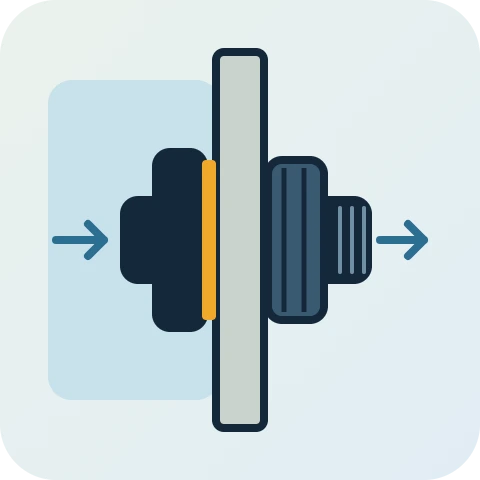
Why it works: different densities do different jobs. Coarse mats catch big debris, fine mats catch small particles, and all of them house bacteria. The problem it solves: soft pads that squash flat and clog.
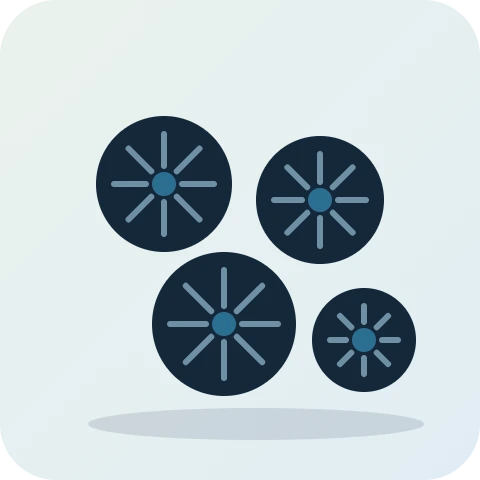
Why it works: bacteria need surface area and oxygen. Bio balls give lots of both. The problem it solves: heavy lava rock that clogs and is miserable to clean.

When to buy a filter instead
DIY is not always the right answer. Buy a ready-made filter if you have no place to hide a barrel, you want a built-in UV clarifier for green water, or you simply prefer a warranty to a weekend project. A sealed pressure filter can also sit below the pond level and feed a waterfall, which a gravity DIY filter cannot.
One example is the Aquascape UltraKlean 2000 pressure filter, listed for ponds up to 2,000 gallons with a 14-watt UV clarifier and a sponge-free design. Our guides to pond filters and UV clarifiers explain what to look for.
| DIY filter | Ready-made filter | |
|---|---|---|
| Cost of parts | Usually lower | Usually higher |
| Capacity for the money | High | Moderate |
| Time to set up | An afternoon or a weekend | An hour |
| Looks | Needs hiding | Compact, often buriable |
| UV clarifier | Add one separately | Often built in |
| Warranty | None | Yes |
8 common DIY filter mistakes (and how to fix them)
- Outlet too small. The filter overflows. Fix: make the outlet at least one pipe size bigger than the inlet.
- No bottom drain. Sludge builds up with no way out. Fix: fit a drain valve at the lowest point.
- Bio media before mechanical. The bio media clogs. Fix: mats first, bio media last.
- Using a barrel that held chemicals. Fix: food-grade containers only.
- Skipping bulkhead fittings. Silicone alone will leak. Fix: use proper bulkheads with gaskets.
- Filter below pond level. A gravity filter cannot drain uphill. Fix: raise it, or buy a pressure filter.
- Washing media in tap water. Chlorine can kill the bacteria. Fix: rinse in a bucket of pond water.
- Cleaning everything at once. You wash away your bacteria. Fix: clean half the media at a time.
Pro tips
- Add a swirl. Why it works: an elbow on the inlet makes water spin, and heavy dirt drops to the bottom before it reaches the mats.
- Fit a union on the inlet pipe. Why it works: you can disconnect the filter for cleaning without cutting anything.
- Keep it dark. Why it works: a lid stops algae growing inside the filter.
- Flush the drain weekly. Why it works: a ten-second flush removes sludge before it rots.
- Never switch it off for long. Why it works: the bacteria need oxygen from moving water. See should a pond pump run all the time.
- Add air. Why it works: an air stone in the filter gives the bacteria more oxygen. See our guide to pond aerators.
Remember: big and slow beats small and fast. A large filter with gentle flow will always clean better than a small one with water racing through.
Real-life examples
These are typical situations we put together to show how the ideas fit. They are illustrations, not customer reviews.
The patio pond
The setup: a 200-gallon preformed pond with four goldfish. The build: a 5-gallon bucket filter tucked behind a planter, fed by a small pump. Pads are rinsed every couple of weeks.
The family goldfish pond
The setup: a 1,200-gallon liner pond that kept turning murky. The build: a 55-gallon barrel up-flow filter with mats and bio balls, hidden behind a fence panel, returning through a small waterfall.
The natural pond
The setup: a 3,000-gallon pond where the owner wanted no visible equipment. The build: a planted bog filter along one side, about a fifth of the pond’s surface area. Water wells up through the gravel and spills back over a stone edge.
Frequently asked questions
What is the best DIY pond filter?
For most backyard ponds, an up-flow barrel filter with mats and bio balls. For a natural look and very low upkeep, a gravel bog filter.
How big should a DIY pond filter be?
Bigger is better. As a rough guide, a 55-gallon barrel suits ponds up to about 2,500 gallons with a normal fish load. A bog filter is usually sized at 10% to 30% of the pond’s surface area.
What media is best for a DIY filter?
Coarse and medium filter mats to trap dirt, followed by bio balls for bacteria. Avoid relying on lava rock, which is heavy and clogs.
How long does a new filter take to work?
The bacteria take several weeks to establish. During that time, stock lightly, feed sparingly and test the water.
Do I still need a UV clarifier?
Only if you have green water that the filter alone does not clear. A UV unit can be added in the pipe between the pump and the filter.
How often should I clean a DIY filter?
Flush the bottom drain weekly and rinse the mats when the flow slows. Always use pond water, and never clean all the media at once.
Your DIY filter checklist
- ✅ I know my pond volume and my target flow
- ✅ I chose a design that fits my pond and my space
- ✅ My container is food-grade and clean
- ✅ Inlet is at the bottom, outlet at the top
- ✅ The outlet is at least one size bigger than the inlet
- ✅ There is a drain valve at the lowest point
- ✅ Mats go first, bio media last
- ✅ The filter sits above the pond level on a solid base
- ✅ Every pipe passes through a proper bulkhead fitting
- ✅ I will rinse media in pond water, half at a time
Ready to build?
Start with a set of rigid filter mats. They are the heart of any barrel or tank filter.
See the Matala filter mats on Amazon →
As an Amazon Associate I earn from qualifying purchases.
How we researched this guide
This article is desk research, not a hands-on test. In October 2026 we collected the specifications shown on the Amazon.com listings for each product mentioned here and followed widely shared pond-keeping practice for home-built filters. Where sources gave different numbers, we showed the range or flagged it. We do not quote prices, star ratings, or stock levels because they change daily. Manufacturers also update products, so please confirm the details on the current listing and in the manual before you buy.
Related guides
Best Pond Aerators and Air Pumps: 5 Kits Matched to Your Pond Size
A pond aerator adds oxygen for just a few watts. Here are five proven kits matched to pond size and depth, with running costs, setup steps and the mistakes to avoid.

How to Match a Pond Pump to a Filter and UV Clarifier
Too little flow starves a filter and too much pushes dirt straight through it. Use the filter and UV ratings to set the flow window your pump must hit.
12 Ways to Make Your Pond Pump Last Longer
Most pond pumps fail early for the same few reasons. These 12 simple habits protect your pump from heat, clogs, dry running and wear, and save you money.