Submersible Pond Pumps: What to Look For
Submersible pumps sit in the water, need no priming and suit most garden ponds. Here is what separates a good one from a frustrating one.
This page contains affiliate links. As an Amazon Associate I earn from qualifying purchases. How this works.
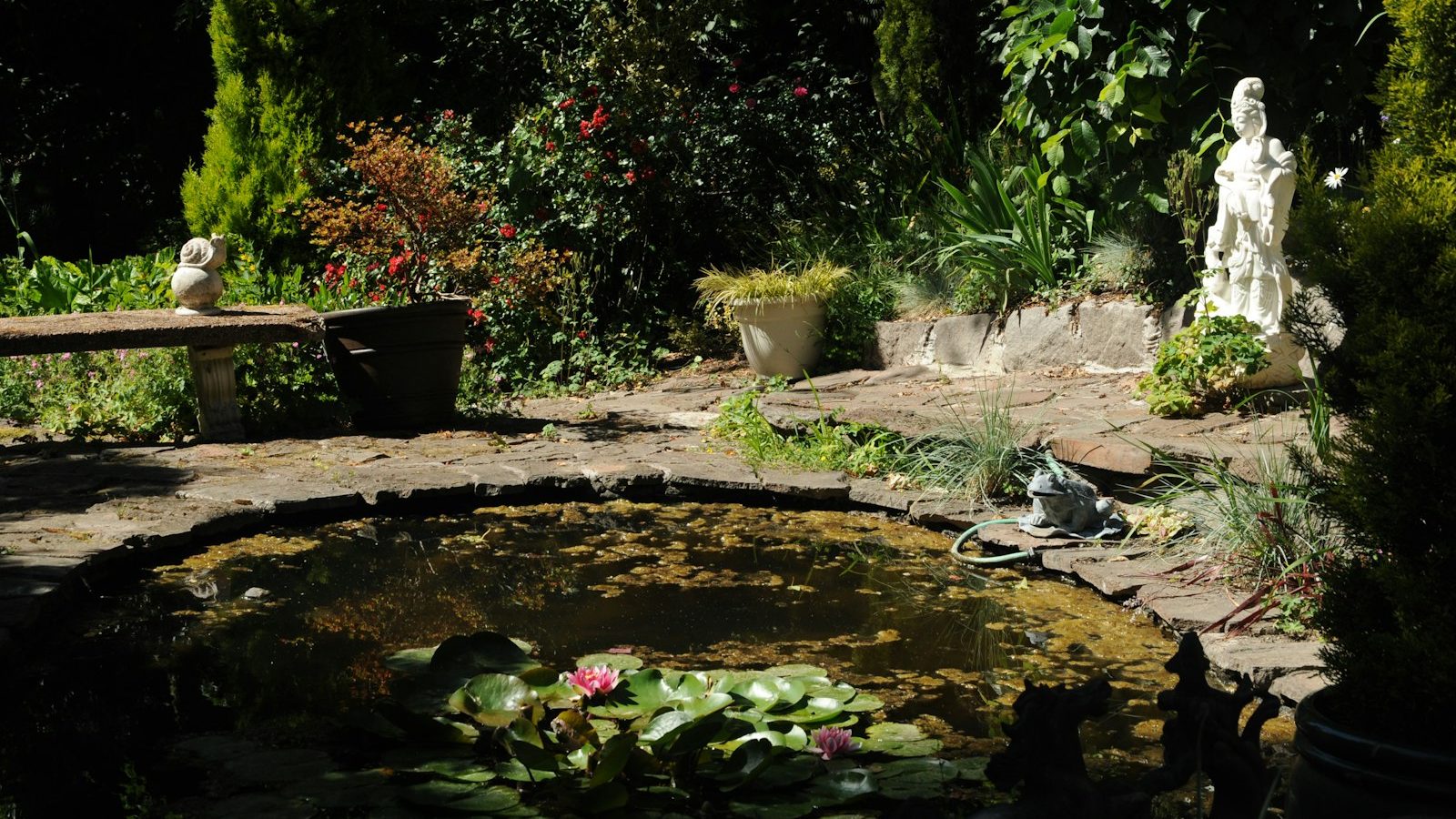
For most garden ponds a submersible pump is the simplest choice. Pick one whose curve gives your target flow at your head height, with an intake that suits your debris load and a cord long enough to reach a protected socket.
A submersible pump is cooled by the water around it, runs almost silently and needs nothing more than a hose and a socket. The price of that simplicity is that cleaning means lifting it out of the pond.
If you are weighing it against a pump that sits outside the pond, see submersible vs external pond pumps.
What to compare
- Flow at your head height. Maximum flow is measured with no lift. Read the curve at your own total head.
- Motor design. Magnetic-drive pumps tend to suit low-head circulation; asynchronous and direct-drive designs suit higher head. Our buying guide explains the difference.
- Intake and solids handling. A fine cage keeps debris out but clogs sooner; a solids-handling pump passes waste on to a filter.
- Cord length. Measure the route to the socket. Manufacturers do not permit extension leads on most pond pumps.
- Ease of cleaning. Tool-free access to the impeller makes regular cleaning far more likely to happen.
Where this type works, and where it does not
A good fit when
- Small to medium garden ponds
- You want a quiet, simple installation
- There is nowhere dry and sheltered for an external pump
Look elsewhere when
- Reaching into the pond to clean the pump is difficult
- The system is large and runs at high flow all year
- You want a pump you can service without disturbing the pond
Compare current options
These links open live Amazon search results rather than a fixed list, so you always see what is currently available. Check the flow at your own head height, the warranty and the cord length on the listing before you buy.
Common questions
Where should a submersible pump sit in the pond?
Usually on a flat support raised slightly off the bottom so it does not draw in settled sludge, or inside a skimmer or pump vault. Follow the manual for minimum water depth and orientation.
Can a submersible pump run dry?
Most are cooled and lubricated by water and can be damaged by running dry. Keep the water level up and choose a model with low-water or thermal protection where the level may fall.
Related guides and tools
- Submersible vs external pumpsWhich layout suits your pond
- What size pond pump do I need?The step-by-step sizing method
- How to clean a pond pumpA safe routine that restores flow
- Pump size calculatorVolume, target flow and head in one pass
Pond equipment runs on mains power next to water. Use outdoor-rated equipment on a GFCI (RCD) protected supply, follow the manufacturer’s manual and your local electrical code, and use a qualified electrician for any fixed wiring.