Troubleshooting & Pond Care
12 Ways to Make Your Pond Pump Last Longer
Most pond pumps fail early for the same few reasons. These 12 simple habits protect your pump from heat, clogs, dry running and wear, and save you money.
This guide contains affiliate links. As an Amazon Associate I earn from qualifying purchases. How this works.
✅ The short answer
To make a pond pump last longer, protect it from the four things that kill pumps: running dry, clogging, overheating and damaged cords. Keep the water level up, keep the intake clear, size the pump and pipe correctly, and clean it before it struggles.
None of this is hard or expensive. The twelve habits below take a few minutes a week and can add years to the life of your pump.
A pond pump has a tough life. It sits under water, in the dark, running for thousands of hours a year, with leaves, grit and algae trying to get inside. It is no surprise that many pumps give up sooner than they should.
But here is the thing: pumps rarely just “wear out.” They are usually pushed over the edge by something that could have been avoided. This guide gives you 12 ways to make your pond pump last longer, explains why each one works, and shows which small upgrades are worth the money.
One honest note: this guide is desk research based on common manufacturer instructions and how pond pumps are built. We will not promise a number of years, because no one honestly can.
Why pond pumps fail early
Understand the enemy first. Almost every early pump failure comes from one of these.
| Cause | What happens | How common | Easy to prevent? |
|---|---|---|---|
| Running dry | No water to cool the motor, so it overheats | Very common | Yes |
| Clogged intake | The pump strains and runs hot | Very common | Yes |
| Debris in the impeller | Grit wears or jams the spinning part | Common | Yes |
| Wrong pump for the job | Works at its limit all the time | Common | Yes, at purchase |
| Limescale | Hard water coats the impeller until it sticks | In hard-water areas | Yes |
| Cord or seal damage | Water reaches the electrics | Less common | Mostly |
| Freezing | Ice cracks the housing or pipe | In cold climates | Yes |
Key insight: Heat is the real pump killer. A pond pump is cooled by the water flowing through it. Anything that reduces that flow, such as low water, a clog or a kinked hose, makes it run hot.
12 ways to make your pond pump last longer
1. Never let it run dry
Why it works: most submersible pumps are cooled and lubricated by water. Without it, the motor can overheat quickly. How: check the water level every week, and more often in hot or windy weather. If your pond or basin loses water quickly, choose a pump with built-in thermal or low-water protection.
2. Keep the intake clear
Why it works: a blocked intake starves the pump, and a starved pump runs hot and wears fast. How: empty the skimmer basket or brush the cage weekly. In fall, do it every day or two.
3. Lift the pump off the bottom
Why it works: the pond floor is where sludge and grit settle. A pump sitting in it sucks that grit straight through the impeller. How: set the pump on a flat stone or stand a few inches up.
4. Put it in a skimmer or pump vault
Why it works: a vault or skimmer keeps rocks, gravel and large debris away, and makes the pump easy to reach, so you actually service it. How: see the vault recommended below.
5. Use a pre-filter on fine-intake pumps
Why it works: a bigger foam surface clogs more slowly and stops grit reaching the impeller. How: fit the pre-filter made for your pump, and rinse it monthly.
6. Buy the right size in the first place
Why it works: a pump that is too small works flat out at its limit. A pump that is far too big gets throttled hard. Both are stressful. How: size by pond volume and lift. Our guide to what size pond pump you need shows how, and our pump size calculator does the math.
7. Use wide, smooth pipe
Why it works: narrow or kinked hose makes the pump push against extra resistance all day. How: use the largest hose your pump’s outlet accepts, keep the run short, and avoid tight bends. See head height explained.
8. Clean it before it struggles
Why it works: slime and scale build up slowly inside the impeller chamber. Cleaning restores full cooling flow. How: rinse the pre-filter monthly and do a full clean each spring and fall. Follow our pond pump maintenance checklist.
9. Deal with limescale
Why it works: in hard-water areas, a chalky crust forms on the impeller until it drags or sticks. How: many makers suggest soaking the impeller and chamber in white vinegar and water, then rinsing well. Check your manual first.
10. Protect the cord and plug
Why it works: a nicked cord lets water into the pump or creates a shock risk. How: never lift the pump by the cord, keep the cord away from mower and trimmer paths, use a GFCI outlet, and inspect the cord twice a year.
11. Avoid constant stop-start
Why it works: starting is the hardest moment for a motor. A pump on a timer that clicks on and off many times a day works harder than one that simply runs. How: let filter pumps run day and night. If you use a timer for a show waterfall, use long on and off periods.
12. Get winter right
Why it works: water expands when it freezes and can crack a housing or split a pipe. How: follow your manual. In hard-freeze areas many owners remove the pump, clean it, and store it frost-free. Some makers say to store it in a bucket of water so seals stay wet; others say dry. See running a pump in winter.
⚠️ Safety first: Water and electricity are a dangerous mix. Always unplug the pump before you put your hands in the pond or touch the equipment. Never lift a pump by its cord. Plug into a GFCI-protected outdoor outlet, and if the GFCI keeps tripping, stop using the equipment and have it checked. For any fixed outdoor wiring, hire a licensed electrician.
Small upgrades that protect your pump
These are not must-haves. But each one tackles a specific cause of early failure, and each costs far less than a new pump.

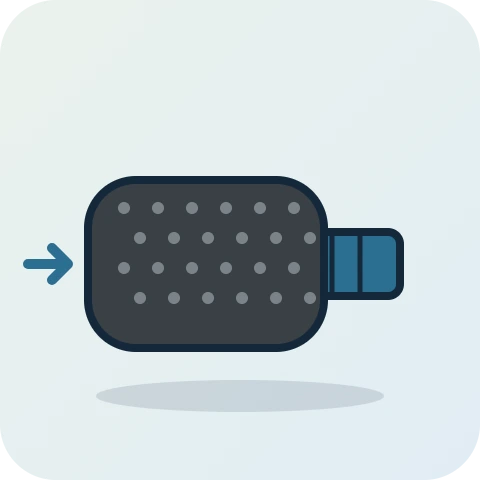
Why it works: the pump draws clean water from inside the vault instead of from between rocks. The problem it solves: gravel and grit chewing up the impeller, and a pump you cannot reach to service.

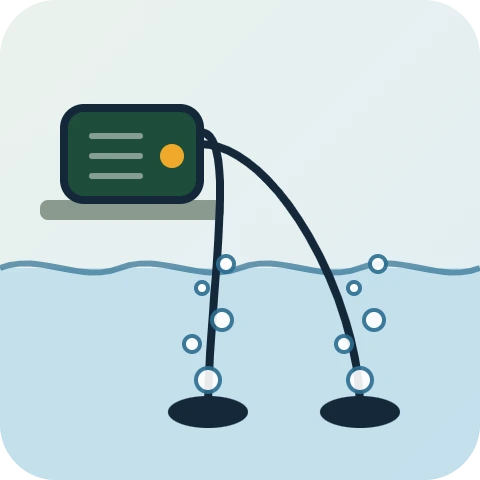
The idea: a pump failure is far less of an emergency when an aerator is already running. You can fix the pump calmly instead of in a panic.
A simple routine that covers all 12
Twelve habits sounds like a lot. In practice they fold into a short routine. Here is how the year looks.
| When | What to do | Which habits it covers |
|---|---|---|
| Every week | Check the water level, clear the intake, glance at the flow | 1, 2 |
| Every month | Rinse the pre-filter, listen for new noises, check the hose | 5, 7, 8 |
| Spring | Full clean, remove scale, inspect the cord, test the GFCI | 8, 9, 10 |
| Fall | Net the pond, full clean, prepare for winter as the manual says | 2, 8, 12 |
| When you buy or rebuild | Size the pump and pipe correctly, raise it or use a vault | 3, 4, 6, 7 |
That is about five minutes a week and half an hour twice a year. Our pond pump maintenance checklist lays out each task in detail, and the free maintenance tracker lets you tick them off.
Repair or replace? How to decide
Sooner or later every pump owner faces this question. A little thought here can save you money and keep an old pump going for years.
Usually worth repairing
- A worn or chipped impeller. This is the most common wear part, and most makers sell replacements. Swapping one takes minutes.
- A flattened O-ring or seal ring on the impeller cover.
- A torn or clogged pre-filter sponge.
- A cracked intake cage, if the maker sells the part.
Usually time to replace
- The pump trips the GFCI. Water has reached the electrics. This is not a safe home repair.
- The cord is damaged where it enters a sealed pump.
- The motor is dead and the impeller turns freely.
- The housing is cracked, often from freezing.
- Parts cost close to the price of a new pump.
Before you buy anything, check the warranty. Many pond pumps carry two or three years of cover, and some longer. If yours is still inside that period, contact the maker or the seller first. And if you are replacing the pump, take a moment to ask why the old one failed. If it ran dry or choked on debris, the new one will too unless something changes.
💡 Good to know: When you replace a pump, check that the size was right in the first place. Our pump size calculator takes two minutes and could save you from buying the wrong pump twice.
Buying a pump that is built to last
The longest-lasting pump is the one you chose well. When you shop, look past the flow number and check these points.
- A clear pump curve. Makers who publish full performance data tend to stand behind their products.
- A multi-year warranty. It is the maker’s own estimate of how long the pump should last.
- Spare parts you can buy. An impeller and seals available separately mean a repair instead of a replacement.
- The right design for your pond. A solids-handling pump for a leafy pond. A fine-intake pump only where the water is clean.
- Protection built in. Thermal cut-out or low-water protection saves the motor when something goes wrong.
- Tool-free access to the impeller. If cleaning is easy, it gets done.
Warning signs your pump needs attention
| Sign | Likely cause | What to do |
|---|---|---|
| Flow is weaker | Clogged intake, pre-filter or impeller | Unplug and clean |
| Rattling or grinding | Debris in the impeller, or a worn impeller | Unplug, open and inspect |
| Humming, no flow | Jammed impeller or trapped air | Clear the impeller, tilt to release air |
| Stops and restarts by itself | Overheating cut-out | Find the cause: low water or a blockage |
| Trips the GFCI | Water in the motor or a damaged cord | Stop using it. Replace or contact the maker |
| Pump feels very warm | Low flow through the pump | Check water level and intake |
Our pond pump troubleshooting guide walks through each of these step by step.
⚠️ Watch out: A pump that keeps tripping the GFCI is not “fussy.” It is telling you water has got somewhere it should not be. Do not move it to another outlet. Stop using it.
6 mistakes that shorten a pump’s life
- Ignoring a slow drop in flow. Fix: clean the pump as soon as you notice.
- Throttling the intake. Fix: only ever fit valves on the outlet side.
- Running a fine-mesh pump in a leafy pond. Fix: use a solids-handling pump or a skimmer.
- Carrying the pump by its cord. Fix: use the handle.
- Leaving it in a frozen pond against the manual’s advice. Fix: follow the winter instructions for your model.
- Opening the sealed motor. Fix: only take apart what the manual shows. Opening more lets water in and ends the warranty.
Pro tips
- Keep spares of the cheap parts. Why it works: an impeller, an O-ring and a sponge cost little. Having them means no weeks of running a struggling pump.
- Register the warranty and keep the receipt. Why it works: many pumps have multi-year cover that people never claim.
- Net the pond in fall. Why it works: stopping leaves at the surface is easier than pulling them out of a pump.
- Check the pump after storms. Why it works: storms wash debris in and can trip the GFCI.
- Buy a pump with parts support. Why it works: a pump you can repair lasts longer than one you can only replace. See our pond pump buying guide.
Remember: water in, water out, nothing in the way. A pump that always has a clear, full supply of water has very little to go wrong.
Real-life examples
These are typical situations we put together to show how the habits help. They are illustrations, not customer reviews.
The fountain that kept burning out pumps
The situation: a small patio fountain went through a pump every summer. The basin was losing water to wind and running low. The change: a weekly top-up and a pump with low-water protection. The cause was dry running, not bad pumps.
The gravel-bed waterfall
The situation: a pump buried in the gravel of a Pondless waterfall kept jamming with grit. The change: the pump was moved into a vault. Clean water in, easy access from the top, no more jams.
The hard-water pond
The situation: a pump got noisier each year and finally stuck. The impeller was coated in white scale. The change: a vinegar soak twice a year, as the manual suggested, keeps the impeller free.
Frequently asked questions
How long does a pond pump last?
It depends on the design, the hours it runs and the care it gets, so there is no honest single number. Warranty length is a fair hint of what the maker expects.
Does running a pump 24/7 wear it out faster?
Not usually. Pond pumps for filtration are designed to run continuously. Frequent stop-start, clogs and dry running are harder on a pump than steady use.
What kills pond pumps most often?
Running dry and clogged intakes. Both reduce the water flow that cools the motor.
Is it worth repairing a pond pump?
Often yes, if the fix is a new impeller, seal ring or sponge. If the motor has failed or the pump trips the GFCI, replacement is the safe choice.
Should I turn my pump off to rest it?
No. Pumps do not need rest, and a filter pump on a fish pond should run all the time.
Does a bigger pump last longer?
Not by itself. The pump that lasts is the one correctly sized for the job, with a clear intake and the right pipe.
Your pump-protection checklist
- ✅ Water level checked every week
- ✅ Intake or skimmer basket cleared every week
- ✅ Pump raised off the pond floor, or in a vault or skimmer
- ✅ Pre-filter fitted where the pump needs one
- ✅ Pump and pipe sized correctly for the pond
- ✅ Full clean each spring and fall
- ✅ Scale removed if I have hard water
- ✅ Cord inspected twice a year, GFCI tested
- ✅ Winter plan matches the manual
- ✅ Spare impeller, O-ring and sponge on the shelf
Pump sitting in gravel?
A pump vault keeps grit out and makes servicing simple.
See the pump vault on Amazon →
As an Amazon Associate I earn from qualifying purchases.
How we researched this guide
This article is desk research, not a hands-on test. In October 2026 we collected the specifications shown on the Amazon.com listings for each product mentioned here and followed care steps that pump makers commonly give in their manuals. Where sources gave different numbers, we showed the range or flagged it. We do not quote prices, star ratings, or stock levels because they change daily. Manufacturers also update products, so please confirm the details on the current listing and in the manual before you buy.
Related guides
Pond Pump Maintenance Checklist: Weekly, Monthly and Seasonal Tasks
A simple pond pump maintenance checklist you can follow all year. Know what to check each week, month and season to keep your pump running and your water clear.
Pond Pump Troubleshooting: Find the Fault by Symptom
Pump stopped, flow dropped, or a new noise? Work through the likely causes in order, starting with the safe checks, and know when to stop.
How to Clean a Pond Pump Safely
Most lost flow comes back with a ten-minute clean. Follow these steps to clean the intake, impeller and housing without damaging the pump.