Waterfalls, Fountains & Solar
How to Slow Down the Waterfall Pressure of a Pond (7 Easy Fixes)
Waterfall too strong, too loud or splashing water out of the pond? Here are seven safe ways to slow the flow, from a $10 valve to an adjustable pump.
This guide contains affiliate links. As an Amazon Associate I earn from qualifying purchases. How this works.

✅ The short answer
The easiest way to slow down a pond waterfall is to fit a ball valve on the outlet side of the pump and close it a little at a time. It costs a few dollars, takes ten minutes, and you can fine-tune the flow whenever you like.
Want a better long-term fix? Send the extra water somewhere useful with a diverter valve, or switch to an adjustable-flow pump that you can turn down from your phone. All seven options are explained below.
A waterfall should sound like a gentle stream, not a fire hose. If yours is blasting over the rocks, soaking the patio, or draining the pond a little more every day, the pump is simply moving more water than the waterfall can handle.
The good news is that this is one of the easiest pond problems to fix. In this guide you will learn how to slow down the waterfall pressure of a pond in seven ways, which fix suits which situation, what each one costs, and the one mistake that can damage your pump.
One honest note: this guide is desk research based on published product details and well-known pond-building rules of thumb. We have not tested these products ourselves.
Why is my pond waterfall too strong?
Before you fix it, it helps to know the cause. Almost every overpowered waterfall comes down to one of these four things.
- The pump is too big. This is the most common reason. Many people buy a size up “to be safe” and end up with far more flow than the spillway needs.
- The spillway is too narrow. The same flow looks gentle over a wide lip and fierce through a narrow gap.
- The drop is too tall. Water speeds up as it falls. A long, straight drop makes more splash and more noise.
- There is nothing to break the fall. Water hitting a flat pool surface from a height splashes far more than water landing on a rock.
How much flow should a waterfall have?
A widely used rule of thumb in the pond trade is to size waterfall flow by the width of the spillway. Measure the lip where the water spills over, in inches, and use this table.
| Look you want | Flow per inch of spillway | 12-inch spillway | 24-inch spillway |
|---|---|---|---|
| Gentle trickle | About 50 GPH | 600 GPH | 1,200 GPH |
| Even sheet of water | About 100 GPH | 1,200 GPH | 2,400 GPH |
| Strong, noisy flow | About 150 GPH or more | 1,800 GPH | 3,600 GPH |
GPH means gallons per hour. These are common rules of thumb, and pond builders vary in the numbers they prefer.
So if you have a 12-inch spillway and a pump pushing 2,500 GPH up to it, you have about twice the flow you need. That is your problem in one sentence. Our free waterfall flow calculator will work out the right number for your own spillway.
Key insight: You rarely need to change the waterfall. You need to change how much water reaches it. Every fix below does that in a different way.
7 ways to slow down a pond waterfall
Here are the seven fixes at a glance. Start at the top: the first three are cheap and quick.
| Fix | Cost | Difficulty | Saves electricity? | Best when |
|---|---|---|---|---|
| 1. Ball valve on the pump outlet | Low | Easy | A little | You want a quick, adjustable fix |
| 2. Diverter (3-way) valve | Low | Easy | No | You can use the spare water elsewhere |
| 3. Widen or reshape the spillway | Free to low | Medium | No | The flow is fine but looks harsh |
| 4. Break the fall with rocks | Free | Easy | No | Splash and noise are the main issue |
| 5. Adjustable-flow pump | High | Easy | Yes | You want control and lower bills |
| 6. Smaller pump | Medium | Easy | Yes | The pump is far too big |
| 7. Second outlet or stream | Medium | Medium | No | You would like a second feature anyway |
Fix 1: Fit a ball valve on the outlet side
A ball valve is a simple tap that fits in the pipe between the pump and the waterfall. Turn the handle and the opening gets smaller, so less water gets through. It is the fastest way to slow a waterfall, and you can adjust it by eye until it looks right.
Why it works: pond pumps are centrifugal pumps. When you narrow the pipe after the pump, the pump simply moves less water. Most pond pump manuals allow this, and many pumps ship with a flow control for exactly this reason. Check your own manual to be sure.
How to do it: unplug the pump. Cut the pipe in a spot you can reach. Fit the valve with the right adapters and clamps. Plug the pump back in and close the valve a little at a time until the waterfall looks right.
⚠️ The one rule you must not break: only ever restrict the outlet side of a pump, never the inlet. Starving a pump of water on the intake side can damage it. Do not close a valve all the way either. A pump needs some water moving through it to stay cool.
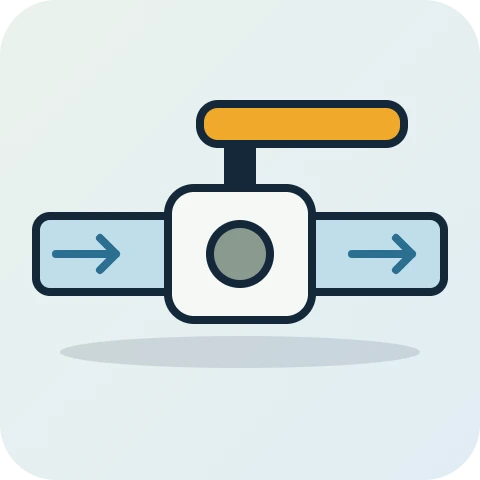
Who it is for: anyone who wants the cheapest, quickest fix. The problem it solves: it gives you a dial for your waterfall, so you can set a gentle flow for evenings and open it up when you want more sound.
Fix 2: Send the spare water somewhere else with a diverter
A diverter, also called a 3-way valve, splits the water from your pump into two paths. One path goes to the waterfall. The other goes back to the pond, to a fountain, or to a second small feature. Each side has its own valve, so you choose how much goes where.
Why it works: the pump keeps running at close to its normal flow, which it is happy to do, while the waterfall only gets the share you give it. The rest still circulates and still passes your filter if you plumb it that way.

The problem a diverter solves: you keep a strong, healthy flow through the pump and filter, but the waterfall only gets what looks and sounds good.
Fix 3: Widen or reshape the spillway
If the amount of water is right for the pond but the waterfall still looks harsh, change the shape of the lip. A wider spillway spreads the same water into a thinner, calmer sheet. Going from a 12-inch lip to an 18-inch lip cuts the flow per inch by a third.
How to do it: switch the pump off, then reset the top rocks so the water has a wider, level edge to spill over. Use waterfall foam made for ponds to fill gaps behind the rocks so water runs over them, not under them.
Fix 4: Break the fall
Splash and noise come from water hitting the surface hard. Place a flat rock where the water lands, or add a small step halfway down, so the water runs down stone instead of dropping through the air. Two short drops are quieter and lose less water than one tall one.
Fix 5: Switch to an adjustable-flow pump
If you are replacing the pump anyway, an adjustable pump is the smartest fix. You choose the flow with a button, a remote, or a phone app. Turning the pump down also turns the electricity use down, which a valve does not do nearly as well.

Why it works: instead of fighting a pump that is too strong, you slow the motor itself. The problem it solves: one pump can be gentle on quiet nights and powerful when you have guests, with no tools.
Fix 6: Fit a smaller pump
If your pump is double the size you need, the cleanest answer is a smaller one. It will use less electricity every hour of the year. Use the table above to find your target flow, then read our guide on how to choose a waterfall pump to pick one that delivers that flow at your waterfall height.
Fix 7: Add a second outlet
Have room for a second small spillway, a bubbling rock, or a short stream? Split the flow and enjoy two features from one pump. This uses a diverter (Fix 2) plus a second length of hose.
💡 Good to know: “Pressure” and “flow” are not quite the same thing, but for a waterfall they go together. Less flow reaching the top means a softer, quieter fall.
Step-by-step: slow your waterfall with a valve
- Unplug the pump. Always do this before touching anything in or near the water.
- Find the pipe size. It is usually printed on the hose or pipe. Buy a valve to match.
- Choose the spot. Fit the valve between the pump and the waterfall, where you can reach the handle without getting wet.
- Cut and fit. Cut the pipe square, fit the adapters, and tighten the clamps well. Leaks here lose water fast.
- Start fully open. Plug the pump in with the valve wide open and check for drips.
- Close a little at a time. Turn the handle slowly and watch the waterfall. Stop when it looks and sounds right.
- Check the pond level after a day. If the level has stopped dropping, you have also fixed your splash loss.
⚠️ Safety first: Water and electricity are a dangerous mix. Always unplug the pump before you put your hands in the pond or touch the equipment. Never lift a pump by its cord. Plug into a GFCI-protected outdoor outlet, and if the GFCI keeps tripping, stop using the equipment and have it checked. For any fixed outdoor wiring, hire a licensed electrician.
Do not starve your filter
There is one thing to watch. If the same pump feeds your filter and your waterfall, turning the flow down also turns the filter flow down. A filter needs enough water to keep its helpful bacteria alive and to turn the pond over.
A good target for a pond with goldfish is to move the whole pond volume about once an hour. If slowing the waterfall would drop you below that, use a diverter instead of a plain valve. Send the full flow through the filter first, then split it so only part goes over the waterfall and the rest returns to the pond. Our guide to matching a pump to a filter explains the limits.
6 common mistakes (and how to fix them)
- Putting the valve on the intake. This can starve and damage the pump. Fix: always fit valves after the pump.
- Closing the valve almost fully. The pump may overheat with too little flow. Fix: if you need to cut flow by more than about half, fit a smaller or adjustable pump instead.
- Kinking the hose to slow the water. It works for a day, then the hose splits. Fix: use a proper valve.
- Ignoring water loss. A splashy waterfall can drain a pond and leave the pump running dry. Fix: watch the level, and slow the flow until the loss stops.
- Forgetting the filter. Less waterfall flow can mean less filter flow. Fix: use a diverter so the filter still gets its share.
- Buying a bigger pump to “fix” a weak-looking fall. Often the real issue is a narrow hose. Fix: read head height explained before spending money.
Pro tips for a better-looking waterfall
- Tune it at dusk. Why it works: you will hear the waterfall most in the quiet of the evening, so set the sound level then.
- Mark your favorite setting. Why it works: a dab of paint on the valve handle lets you find the same flow after cleaning.
- Use a flat “weir” stone. Why it works: a level, slightly overhanging stone makes a clean sheet at lower flow, so you need less water for a good look.
- Seal behind the rocks. Why it works: water that sneaks behind the stones is wasted. Pond-safe foam forces it over the front, so a gentler flow still looks full.
- Lower the flow in winter. Why it works: less splash means less ice build-up at the edges. In hard freezes, follow your pump manual. See running a pump in winter.
Remember: a waterfall that loses no water, lets you talk without raising your voice, and keeps the filter fed is a waterfall set just right.
Real-life examples
These are typical situations we put together to show how the fixes work. They are illustrations, not customer reviews.
The patio pond that soaked the deck
The setup: a 300-gallon pond with a 10-inch spillway and a 1,000 GPH pump. Water was landing on the deck boards. The fix: a ball valve, closed bit by bit until the flow looked right for a 10-inch lip (roughly 500 to 600 GPH), and a flat landing rock stopped the last of the splash.
The koi pond with one pump for everything
The setup: a 2,000-gallon koi pond where a 3,000 GPH pump fed the filter and an 18-inch waterfall. The fall was a torrent, but the koi needed the filter flow. The fix: a diverter after the filter. About 1,800 GPH goes over the waterfall and the rest returns through a quiet underwater outlet. The fish keep their full filtration.
The waterfall that was too loud at night
The setup: a Pondless waterfall beside a bedroom window, lovely by day and too loud at 11 pm. The fix: an adjustable-flow pump. Full flow in the afternoon, a whisper at night, changed from a phone.
Frequently asked questions
Will a valve damage my pond pump?
Not if it is on the outlet side and not closed too far. Most pond pumps are designed to work against some restriction. Check your pump manual, never restrict the intake, and never shut the valve completely.
Does slowing the waterfall save electricity?
A valve saves a little on most pond pumps, but not much. An adjustable-flow pump or a smaller pump saves far more, because the motor itself does less work. See pond pump running costs.
How do I make my waterfall quieter?
Reduce the flow, shorten the drop, and give the water a rock to land on. Two small steps are much quieter than one tall drop.
Why is my pond losing water from the waterfall?
Usually splash and overspray from too much flow, or water escaping over the edge of the liner behind the rocks. Slow the flow first. If the level still drops, check the liner edges along the waterfall and stream.
Can I put my waterfall pump on a timer instead?
Only if a different pump runs your filter. If the waterfall pump also feeds the filter, it should run day and night.
What size pump should my waterfall have?
About 100 gallons per hour for every inch of spillway width for an even sheet, measured at the top of the waterfall. Our waterfall pump guide has the details.
Your quick checklist
- ✅ I measured my spillway width in inches
- ✅ I worked out my target flow (about 100 GPH per inch)
- ✅ I know my pipe size
- ✅ I chose a fix: valve, diverter, adjustable pump, or smaller pump
- ✅ Any valve goes on the outlet side only
- ✅ My filter will still get enough flow
- ✅ I unplugged the pump before working on it
- ✅ I checked the pond level a day later
Want the simplest fix?
A 1-1/2 inch ball valve on the outlet pipe lets you dial the waterfall down in minutes.
See the ball valve on Amazon →
As an Amazon Associate I earn from qualifying purchases.
How we researched this guide
This article is desk research, not a hands-on test. In October 2026 we collected the specifications shown on the Amazon.com listings for each product and applied widely used pond-building rules of thumb for waterfall flow. Where sources gave different numbers, we showed the range or flagged it. We do not quote prices, star ratings, or stock levels because they change daily. Manufacturers also update products, so please confirm the details on the current listing and in the manual before you buy.
Related guides
How to Choose a Waterfall Pump
Size a waterfall pump from the spillway width and the look you want, then check it against the lift and the pipe. A worked example shows how.

Solar Pond Pumps: Benefits, Limitations and Who They Suit
Solar pumps cost nothing to run and need no outdoor socket, but their output follows the sun. Here is where they work well and where they fall short.

DIY Pond Filter Ideas: 6 Simple Builds with Step-by-Step Tutorials
Build your own pond filter from a bucket, a barrel or a gravel bog. Six DIY pond filter ideas with step-by-step instructions, media advice and pump sizing.